The post The Top 10 Things I Learned About Life And Parenting From Playing The Witcher 3 appeared first on Sean Bissell.
]]>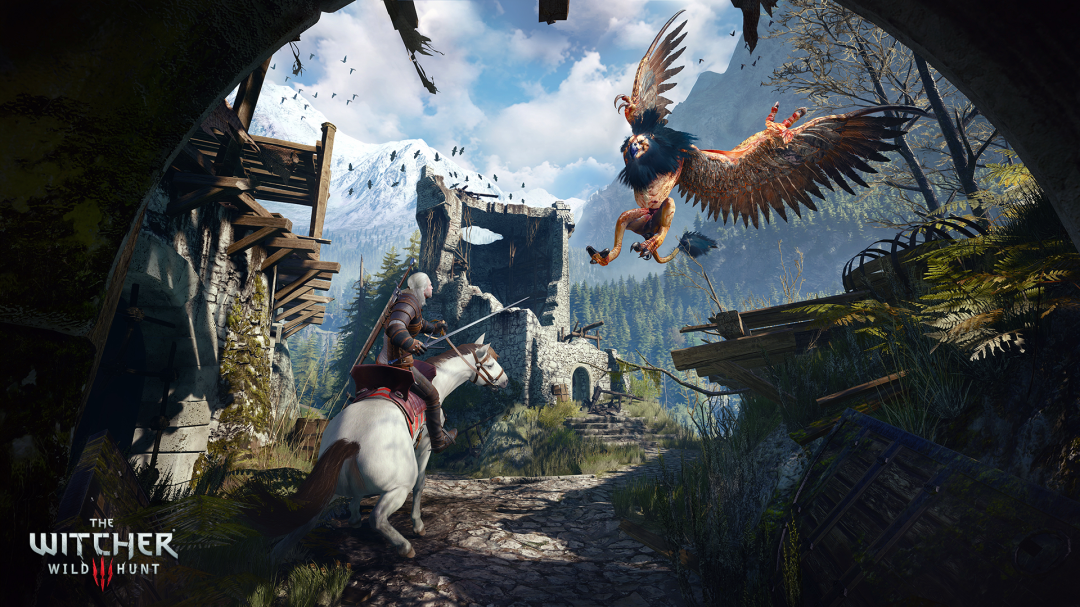
The Witcher 3 is the best video game I have ever played. Hands down.
And I’ve played a lot.
My wife is tired of me talking about The Witcher 3. In fact if I even bring it up, she huffs and rolls her eyes. “Not this again…”
I tried explaining how awesome it was to her. And when that didn’t work, I tried to have her play it with me, from the beginning. But she wasn’t into that.
I’m a little sad that my wife may never gain the experience of what it is to immerse yourself in the world of The Witcher 3.
And it’s not just about the incredible graphics, huge open world, beautiful scenery, and sword and magic yielding fights with monsters.
Sure those are bonus items to help immerse you into the world, and make the experience all that much more fun. But what really stands out is the story, and how you as the player interact with that story. I feel like The Witcher 3 is much more than just a simple video game. It’s a masterclass in life’s mysteries hiding in the mask of a wonderfully created interactive story and game.
First in order to understand the context of The Witcher 3 I feel like I have to set the stage a bit first. Bear with me here if you’re not familiar with this title.
The game The Witcher 3 is set in a fictional middle age world modeled after 13th century Poland. In the game, you play a character named Geralt. Geralt is a “witcher”.
Witchers are a confusing name, as they are not witches, they are genetically modified humans (often orphans) who were taken and subjected to a ritual that kills 2 out of 3 of the boys, but the ones left standing are enhanced physically to have super-human reflexes, strength, endurance, and be able to drink substances that would kill normal humans but provides extra abilities to witchers.
The method of creating witchers was created by essentially the “scientists” or sorcerers of this time period. And this was created out of necessity due to something catastrophic that threatened humans survival. What was that horrific event that created a need for witchers?
Basically, the world humans were living in was in one dimension of time and space, and it happened to collide with two other dimensions. This collision sent humans into a new world inhabited by elfs. Along with this collision monsters were spawned into the new world of elfs and humans. Through this collision magic was also born, as well as chaos.
Humans eventually gained a little control over the monsters magic and chaos and so the first sorcerers were born. But it wasn’t enough. Humans needed help fighting monsters or they felt that they would not survive. So the process of creating witchers who’s sole purpose was to fight against the monsters in the world was invented.
Witchers are super-human, tend to live a very long time, but have had a very difficult childhood due to the genetic modification ritual, trials, and training they are subjected to as children. As a result, they have a reputation of being very cold, emotionless, and they are also not able to have children due to the genetic modifications making them infertile. So they are usually without any family as they were either stripped from their original families to become witchers or orphans to begin with, combined with the inability to create their own new families, they are prone to being lone wolfs out in the world killing monsters for money.
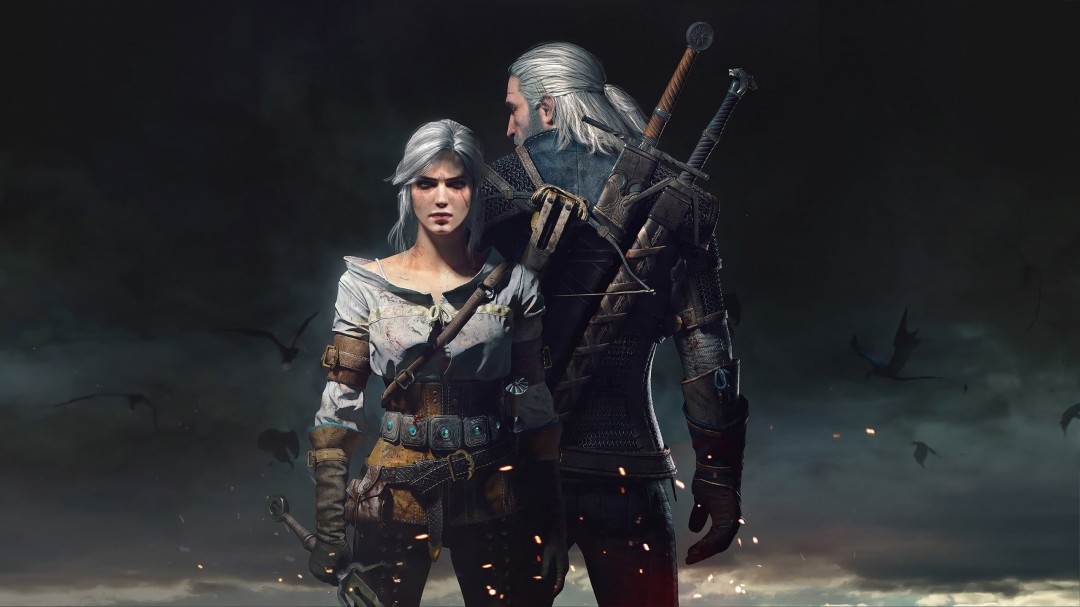
However, Geralt, the witcher you play as the main character of the game, has essentially adopted a daughter named Ciri, and has a long term love interest named Yennifer, so he is unique in that he has much more of a family than the stereotypical witcher.
And before we get to the list, first let me clarify that this list is not made up of things that I learned exclusively from playing The Witcher 3, but it certainly solidified some of the intuitions, thoughts, and feelings I’ve been marinating on for years.
Alright, now that we have that squared away, here’s the list…
1.) Let people be themselves. Trust them.
Spoiler alert: If you haven’t played the game, there are sensitive plot oriented details below. Skip to point two if you want to avoid plot spoilers.
In the main storyline of The Witcher 3 Ciri, your adopted daughter has gone missing and you believe she is in danger. Bottom line, you need to find her and help her get out of trouble.
Eventually you do end up finding Ciri after a very long time playing the game. But once she is found, the danger is not over, there are forces in other dimensions that are trying to capture her and use her unique powers for evil.
In most games, your ability to save your daughter Ciri would be centered around how good of a player you are, if you can fight big boss battles and win. Or perhaps level up your character, get more strength, stamina, ability to absorb damage, gain better weapons, magic, and ultimately become a better warrior. And you can certainly do that in this game. You can spend hours upon hours, days upon days fighting more monsters, gaining experience points, getting more money, and becoming stronger and buying better weapons and armor.
But, when it comes down to the final moments of the game and you have to do everything at your disposal to help Ciri stay alive, the developers of the game pulled a very intelligent style of bait and switch.
It turns out it does not matter how strong, skilled, or how much gear or money you have that will save your daughter Ciri. What matters is your choices you made in how you interacted with your daughter. The little seemingly mundane things is what matters most at the end.
I got one of the “good” endings. But I’m a curious guy and wanted to find out how that actually could have played out differently or if it would. I was shocked and surprised to find out that the entire ending hinged on your previous actions in the game in a very unexpected way.
If you tried to control her too much, if you didn’t let her be herself, if you didn’t let her express her emotions, if you didn’t comfort her, or encourage her to fight her own battles, and let her grow on her own, then her fate in the game will come in varying degrees of negative endings.
On the other hand if you were even the weakest version of Geralt possible at that point of the game, and you didn’t spend much energy towards becoming an uber strong, powerful, and wealthy warrior, and instead only focused on supporting, and encouraging Ciri, letting her fight her own battles, letting her make her own decisions, and letting her unload her feelings, even in destructive ways, then you will end up with the best version of the end of the game possible.
In my experience this is an unprecedented way of controlling the end of a game. Many other games will make a simple final decision the hinging point of how things end. And it will be an obvious decision that gives you a pretty good idea of how things will play out immediately after you make your choice. In these types of games you can simply re-load a save point about 5 to 10 minutes before the end of the game and replay the ending in a different way very simply.
In the Witcher your choices are hidden within the world, and your interactions with Ciri. They are spread out far and wide in the game’s story, and changing all of your interactions would require an almost complete replay of the significant parts of the game. Which could take 15 hours or more if you’re going fast.
The game developers were trying to communicate a very important lesson about life, and in parenting specifically.
It’s not about how strong you are, how much money you have, or your material possessions that will determine the strength of your children. In order to help your children become better people, you must spend time with them, you must help them become the best version of themselves. Not a version of you, a version of them.
It is important to help them fight their own battles, perhaps with your support if needed, but let them be in as much control as possible. You only come in as a guide. As a teacher. As a supporter. Because if you are overbearing, and controlling, you will take their power away, they will never get a chance to gain confidence in themselves. They will lose out on the practice they require to become confident in being who they truly are.
If you try and influence their actions too much, their actions will be an echo of you, not them. Your kids need a guide, a mentor, a coach, a supporter, not a controller. Let them be who they are, allow them to express their emotions, even their outbursts. Be there for them when they need you, listen to them, spend time with them, share in their struggles, support their struggles but do not take their struggles away.
2.) Emotional Payoffs are More Powerful Than Getting Stuff
Most games have you running around in a world, collecting points, or coins, or experience points. And if you choose to go on a mission, quest, finish a level, or whatever, your reward is usually more points, coins, or a sword, armor, or some physical thing. Often with a little “thank you!” from the character you helped, or a “congrats!” for finishing the level.
And that can be fun, to get points, and coins, and cool stuff it’s not nearly as satisfying as what The Witcher 3 masterfully offers.
As you walk around the world of The Witcher you will often encounter people in villages that will ask for help. But this request for help isn’t just like other games that will have the character say something like “I need 5 bear hides, give me these and I’ll give you a reward.” So then you go hunt down some bears for 30 minutes and come back and get some coins or a piece of armor.
The Witcher’s characters that you encounter are much more fleshed out. They have compelling back stories, and real reasons to care about helping them. Often helping them requires a bit of detective work, some battles, and possibly collecting something like a bear hide, but often there are twists and turns to what starts out as a simple request for help will end up a much more complicated situation that involves more characters, unexpected consequences, and a satisfying ending that really feels like you did something meaningful to impact the world and the characters that live there.
This feels much more gratifying and impactful than a simple collection of coins, points, and items. It’s the power of human connection. About sharing stories, and becoming part of someone else’s story. That’s what stirs up emotions and meaning.
And this is true for parenting as well. Don’t just give your kids a place to live, food to eat, toys, clothes and maybe some allowance money. Sure that stuff really matters, and is important. But what they’ll really remember more than anything else is the emotional impact you helped create in their days. Helping them feel like they are impacting their own world in a meaningful way is critical to living a fulfilled life. What can you do to make your kid’s days more emotionally charged in a positive way? How can you help them create more of a human connection with yourself and those they care most about?
3.) How you act in a situation, not so much the outcome, defines how you feel about yourself later.
In life there are rarely, if ever, true “do overs”. Time does not rewind.
And in The Witcher 3, as in real life, there are some events that unfold that will never change, no matter what you do to try and influence them. No matter what you say, do, or how good at playing the game you are.
But, even in these situations where nothing you do can change the ultimate outcome, you are often given the chance to choose what you say, or do surrounding these events. You often get to choose how you treat others, and at least attempt to influence the outcome.
However, the outcome never can change, how you feel as a player is largely impacted by our intentions around the event. For instance. Did you at least try and stand up to someone for doing what you believe to be wrong? Did you try and lie, cheat or steal? Were you honest, genuine, and generous instead?
Even if you were trying to be a “good” guy and things went wrong. You will come out of that situation at least knowing that you had intentions of being “good”.
And, in that same situation, if you were being “bad” and things turned out wrong, you will come out of that situation knowing that you had intentions of being “bad”.
In both situations, the outcome unfolded identically, but your own personal identity and opinion of yourself as a player, and ultimately as a human who makes choices has been influenced.
This is true in life as well. Are you the type of person that would stand up to evil? Would you protect someone from a bully and potentially get punched in the face yourself? Maybe if you didn’t stand up to the bully you might get punched anyway.
But how do you know you’re the type of person that would stand up to a bully if you never try? Without the action of standing up to them, you will never know that you are that type of person instead of the person who just thinks they would stand up to evil.
Because ultimately, regardless of the outcome of the situation, how you reacted to it will influence how you see yourself and how you feel about yourself going forward. Who are you anyhow? Only your actions and your memory of those actions will give you a true idea of that. Regardless of the results of those actions.
4.) Suffering is the background to joy.
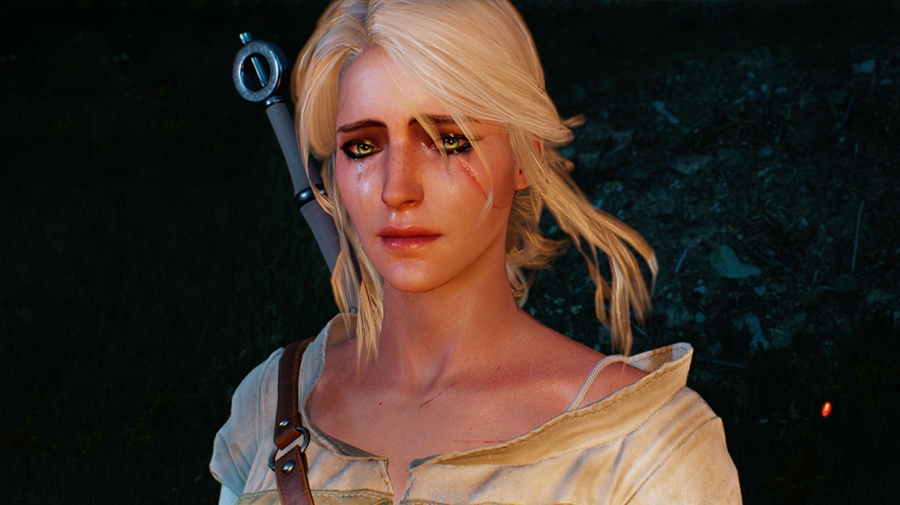
In The Witcher 3 the main character you play, Geralt, is suffering constantly.
He is consistently running around the world, tired, hungry, injured, needing money, worried sick about the well-being of his lost daughter Ciri and the impending doom of the world as they know it.
But it’s on this platform of suffering that the player of the game enjoys the experience all that more. The suffering creates tension. A sense of seriousness. A contrast to when things go good to compare against.
When the lows are so low, the highs can seem even higher.
When you die fighting a difficult monster and have to suffer the frustration of going back to try again, and again, it makes defeating that monster all that much sweeter.
When you finally accomplish a goal that you’ve been working on for literally 20 hours it feels all that more meaningful.
And when you are able to help quiet some of the suffering your main character Geralt is going through, you feel a sense of satisfaction as a player.
There wouldn’t be much of a game if everything was happy, monsters posed no threat, your daughter was never lost, you were never in any danger, and nothing was at stake.
And this is true in real life as well, just at a much less exaggerated level. But the truth is that the background to life is suffering, at least mild suffering for almost all people across the globe.
Not all life is 100% suffering, and you don’t need to suffer every single day to appreciate joy. But what’s amazing about the human mind is that we can experience something like suffering once, or twice, and retain a memory of it to contrast other experiences against. Continuous suffering is likely not necessary to experience joy. But the opposite of joy, at least once, in an impressionable way that you remember is a prerequisite to intellectually acknowledge and appreciate joy.
Video games, books, movies and other forms of stories can teach us about what suffering is and give us a vicarious or simulated experience to contrast against which can help without having to directly experience suffering. But no one would have created a story that contains suffering without having directly experienced it themselves first. And there’s usually no substitute for direct experience when it comes to true human learning and understanding. Stories work, but are simply a representation not a real thing. No matter how many times you say the word fire, it will never be hot. Usually you have to touch the stove to really “get it”.
The Witcher 3 can teach us about suffering in a sense, and use suffering as a comparison device to exaggerate the joys of good things happening in a story, and progress game play in a satisfying way. But there is unfortunately no better substitute to understanding suffering and joy than direct experience.
5.) Little seemingly inconsequential choices can have massive downstream effects.
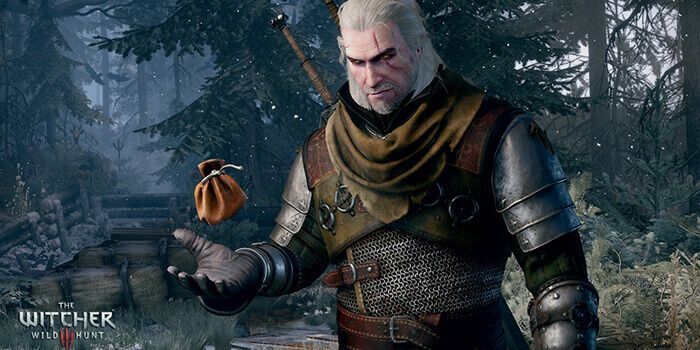
Some games put cause and effect right together. In a straight line. So you can’t miss it. They want to put the reactions to your actions in a time compressed straight line. Do action A get outcome B. Very obvious. And it probably helps sell games. Because if you can easily tell that one thing leads to another and it is repeatable, then you have a quick little feedback loop that gives you instant gratification and also an easily explainable sound-bite-sized story to tell others about and spread the word about what cool things the game does.
But life is not so simple. And the developers behind The Witcher 3 understood this when they made the game. In The Witcher 3 the decisions you make, or actions you perform can have a significantly time delayed effect.
If you do something that turns out in a way you don’t like, you can’t just save and reload the game to do it differently. The Witcher 3 entangles your choices into a massive time-delayed web. Decisions you make in the game can play out 10 hour or later in the game. Often in ways you never saw coming. Sometimes it’s even hard to track back what was the source cause of the later effect. I had to hunt down some information online to even figure out what I did in the game to cause certain outcomes. And if I was to change them, I would almost have to replay significant portions of the game to get a different result. Which then made it not even worth doing.
This is much more reflective of reality. Science and technology push us more and more to believe that there are straight-line easy-explanation cause and effect actions that we can perform in the world. X causes Y and there is no way around that. And it happens quick.
But real life is much more web-like. It’s a tangled mess. The reality is that most of the time X causes Y, but sometimes it doesn’t and often it takes years to see the effects. Often by the time anything results from your previous actions you may have forgotten what even influenced them in the first place.
Being in tune with this reality helps when making parenting decisions, not expecting immediate effects to your parenting style, and later explaining to your children how life is not always a straight line. That effects are often delayed, and that success is often a very tangled line not straight up and to the right.
6.) Every good action results in some evil. Every evil action results in some good.
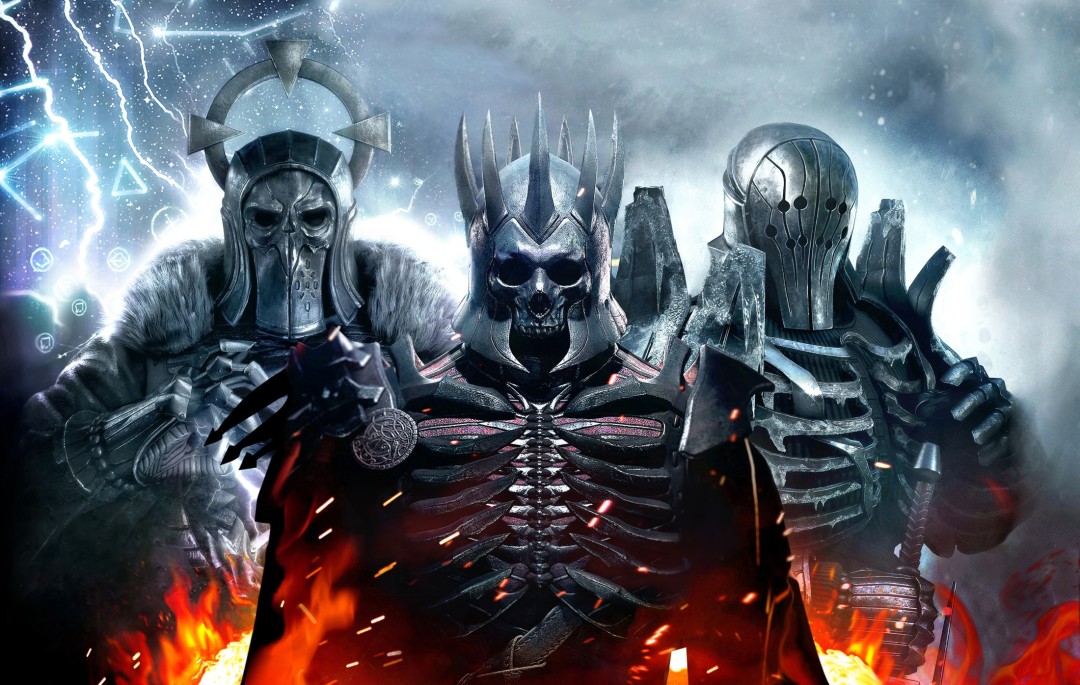
The Witcher 3 recognizes the gray areas of life. Decisions you make rarely turn out the way you think they will. You may think you’re doing something altruistic and good, and your intentions may be in the right place. You truly are trying to help.
However, the thing you do, that you believe in your heart to be right, and done with the best intentions, can end up doing the exact opposite. You may harm someone you were trying to help. Or you may help someone you were trying to harm.
Rarely does any choice you make in this game end up with 100% good or bad results. It’s almost always somewhere in the gray areas of life. The combination of dark and light. Gray.
You see, extreme forces of light cast the darkest shadow. Just try it yourself, shine a bright flashlight on some object. The shadow will be a black hole with sharp defined edges, eating up the light. In contrast, shine a weak light on the object. It will likely have less defined shadow with blurred edges. Less pronounced. Less darkness.
The brighter the light, the darker the shadow.
And in a sense, they are the same thing. The light creates the shadow. If there is no shadow there is no light. If there is no light there is no shadow. They are connected, and born at the same instant in time.
Unless you are very prepared to have your world rocked, do not ask what the true source of the dark is, or the light for that matter.
As the arguably most evil character in The Witcher 3 Gaunter O’Dimm, also known as Master Mirror or the Man of Glass says:
“All who have learned my true name are now either dead or have met an even worse fate.”
And as my good friend Karen Mcc says:
“Your greatest weakness is your greatest strength used compulsively.”
Your dark side is the same part of you that created the light side of yourself. This is true for everyone. Understanding that can be tough, but once you do, that truth can serve as a uniquely enlightening filter to look at life through.
One that I hope to help impart to my two sons.
7.) Humans are the real monsters.
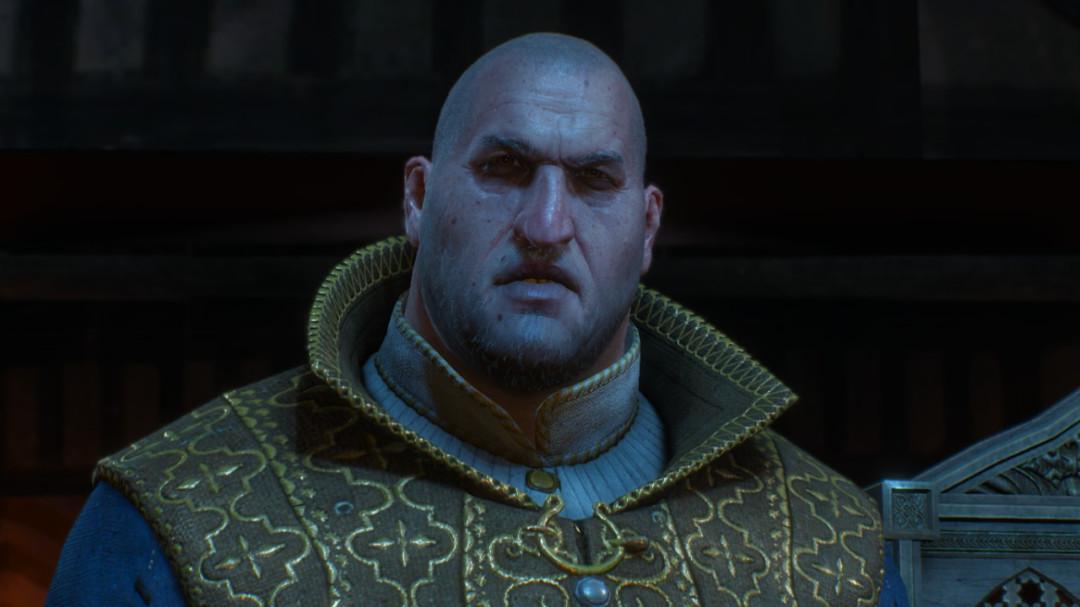
You are a genetically modified human designed to fight monsters in this game. And fighting monsters is a big part of The Witcher 3. But it’s only surface level. If you gloss over it, it may seem like just a way to keep things interesting. To create some fun game play elements, to involve hand eye coordination and strategy and to make things more fun.
And although monsters are for sure created in part for those purposes, they also act as another deeper tool in painting deeper themes.
You see, monsters are largely unintelligent. They are mostly driven by the desire to harm those that are not like them, and those that cross their path and are in the monsters general vicinity or territory. Monsters don’t generally go hunting humans. Instead humans get in the way of monsters and get hurt.
Monsters are driven mostly by a defensive or survival based nature. They are impulsive, predictable, stay out of their way and they won’t harm you. And as weird as this sounds, most of the monsters seem to live in harmony with their environment, as long as humans don’t show up.
On the other hand, in contrast to monsters, humans are intelligent. Many are driven by a desire to harm for personal gain, not just for survival. Some humans don’t just harm others face to face, some humans harm large groups of other fellow humans. One single human can be responsible for the death of thousands of humans.
Often humans don’t just use physical violence to harm each other, they employ methodical and elaborate plans around their attacks. They are not predictable like monsters. Humans will regularly lie, cheat, steal and use masterful deceit tactics to hide their actions. Even if you stay out of a human’s way, they will find you and harm you if they think it will benefit them personally.
To live a life with only monsters wouldn’t be worry free, but mostly what you’d need to do is: Stay out of the monster’s way. Set up defenses. Hire people to destroy threats.
But being a human means protecting against other humans as well. And that is much harder. Taking measures to safe guard against other fellow humans means you don’t really know who the enemy is, you have to anticipate methodical attacks. You must protect against not only physical but psychological attacks. You must guard your financial assets. You need to pay attention to destructive measures against your social status, and your reputation. You must prevent negative people from getting into powerful positions to decrease the chances of people in power preying on large scale human destruction and preying on disadvantaged humans. And in the Witcher 3, you are shown very often the monster side of humanity. And that is masterfully contrasted alongside your classic monsters with sharp claws, ugly mugs, and fangs.
Bottom line, humans torment, kill, and take advantage of their own fellow humans, all while being totally aware of their actions. Often in ways that are a worse fate than simply death, which unintelligent monsters can bring.
Humans can be the most monstrous monsters in existence.
Teaching this to your children can be a difficult task without creating irrational fear about their every day existence. However, choosing the right times and methods to slowly bring this type of topic into conversation when they are ready could be one of the most valuable life lessons to prevent being taken advantage of and used by the real monsters in the world.
8.) Overcome your challenges in an intelligent way instead of only using brute force.
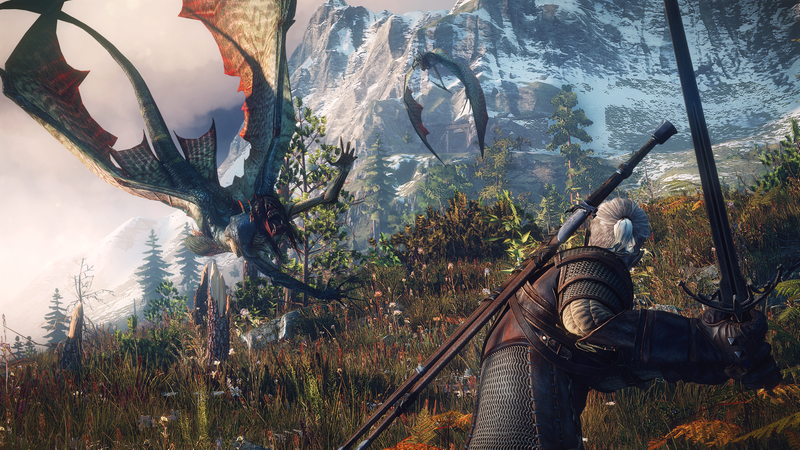
If you jump into a fight in The Witcher 3 without knowing what you’re getting into, or if you try to take on more than a few opponents at once, you will almost surely die within seconds.
The Witcher 3 does not reward simple “hack and slash” activity when defeating your opponents. And if you are outnumbered, you will need to find creative ways of defending yourself and pairing down the mob of attackers.
In this game, you are rewarded for being curious, finding out what you’re up against, and then using that information to craft a strategy for defeating what you’re up against.
There is information on each type of enemy you encounter in what is essentially a large encyclopedia of monsters that you carry around. In this book you can find information about each monster, and what their potential weaknesses may be, along with a bit of background on them.
Through this information you are often able to find herbs, and items to craft together a specific oil you can wipe on your sword blades that will injure them more when hit. Or you can craft explosive devices that scatter specific substances that would harm the monsters more aggressively. Perhaps certain times of day are better, or places you can lure them to. If you do this wrong the fights can be almost impossible to win, but if you do this skillfully then the odds of you surviving go significantly higher.
And this is true for the real world, outside of The Witcher 3 as well. If you go into a situation completely blind, and unprepared, your chances of accomplishing your goal will be much lower than if you had spent the time to research, practice, and prepare. This is a critical life skill that should be passed down to our children. One must prepare for battle in an intelligent way if they want to survive. Whether that be winning at their favorite sport, passing a test or the more critical aspects of the challenges of life.
9.) Life is like a video game.
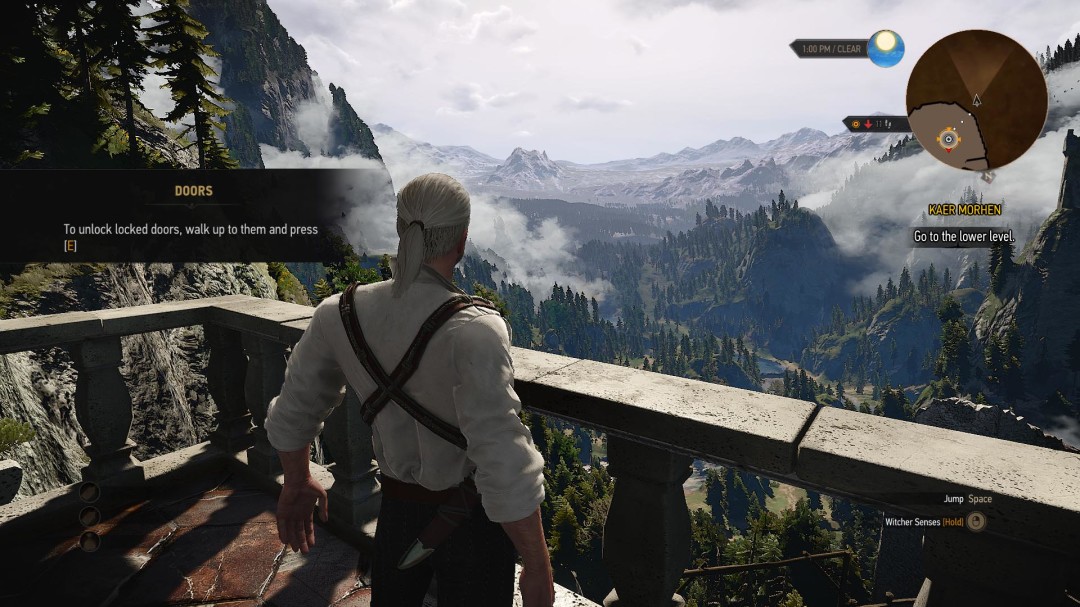
In The Witcher 3, with its vast world to explore, myriad of choices to make, and thousands of ways to succeed or die, you really only have a few ways to influence the world. You have the ability to move a controller to look around the world, and move forwards, backwards, right, and left. You can also jump, swing your sword, dodge, roll, crouch, look through your inventory, and change out magic spells. You also have a choice of what to say during conversations by selecting options.
But all of this is done with essentially a select few button presses, and through a mouse or a controller pad. You really only have a limited way of interacting in this world, and a limit on what you say and do. You can choose what skills you specialize in, and get better at what you prefer to do, but you only have a limited choice of those skills.
You also have no choice of who you play as your main character in The Witcher 3. You are always Geralt the witcher. And you are always born into this well defined world, with the same back story and history. Nothing can change that.
This may seem limiting, but it weirdly mirrors a lot of what we have available to us in the real world, outside of The Witcher 3.
In life, you are always born into yourself, to parents you had no option choosing beforehand, into a well defined world with a history all of its own, that you had no option of joining, and no control over its past.
It may appear as though you have full control at least in your life of what you choose to be as an adult. What profession you go into, where you travel to, and what you say and do on a regular basis.
But the truth is that it is much more limited than you may think. Because you didn’t choose your native language. If your parents and those around you spoke English, you probably speak English, if you were born with those around you speaking Spanish, you probably speak Spanish. You also didn’t choose where you lived as a kid, what school you went to, how well educated you were. And you likely didn’t choose your interests and skills. You naturally gravitated towards what interested you, and refined the skills that were attractive to you. Sure you could go out and become a professional catfish wrangler, but does that interest you? In real life, you don’t get to want what you want.
And if this were real life, and you could actually become a witcher, would you want to do that? Maybe not. But in the game you are thrust into being a Witcher, just like in your real life you are thrust into whatever situation you are in right now. Usually not exactly by choice.
Also, you may think you get to choose what you say whenever you want to say it, and you may feel like only getting the choice of four options at each time you get a dialog screen in a video game. But how many options do you really have to switch up what you say to people? When someone says “How’s it going?” How often do you say something other than “Pretty good. How about you?” Or some variation of that. Do you even have four options you say on a regular basis?
When someone asks a more complex question, you probably only have three or four at the most options that float through your head before you respond. Usually the decision is to be nice, mean, diplomatic, defensive or some variation on that theme. And often it’s much more of an impulsive response rather than a real well thought out conscious decision to respond in an intentional way. Habit takes over for our personalities at some point.
And do you really go through the multiple variations on full sentences that you could say to someone before you respond? Likely not. It would take too much time. Often we respond intuitively, creatively, and on the spur of the moment. Riding an almost unconscious wave of our own knowledge, past experience, personality, and balancing that into the situation we find ourselves at the moment. Conversation is often very unconscious and impulsive in most cases. And because of that, we rarely truly consciously get to decide what we say.
Even just walking around in life, we usually only have the option to go forwards backwards, right and left. We only get to use the “buttons” of our arms, legs, hands, feet, etc.
We may have more “buttons” than a controller or a keyboard does, but there aren’t quite as many as we sometimes are lead to believe. Our choices in life are limited by our bodies.
Our choices are also constrained by our society. You might get mad at a video game for not giving you the option to be rude to someone, or to help someone out in some way that is not presented by the game. But often in life we don’t allow ourselves to be rude to people, like a boss, or person in power, for example, due to societal pressures. And often we feel weird about lending a helping hand to someone we don’t know well, or we may feel like they would take a gift the wrong way. How often have you wanted to do something and didn’t? Video games are like this as well. Sometimes the option is not there, because your character wouldn’t have taken it anyhow. Just like you may not have in real life, even if you believe the option exists. It may not in reality.
Teaching your children to understand that life has limited opportunities to truly act and make a difference is important. We don’t have as much control over our lives as we would like to think, limited control on who we are, what we want, what motivates us, what we were exposed to in our own history, who are parents are, what language we speak, what our natural skills and abilities are, what our societies limitations are, and more. Paying attention to what “buttons” we can truly push in real life, and when to push them to make a difference matters for truly making a difference in your experience of reality. Pretending that you have the ability to control 100% of your life at all times is a recipe for frustration and disaster.
10.) Take some time to meditate.
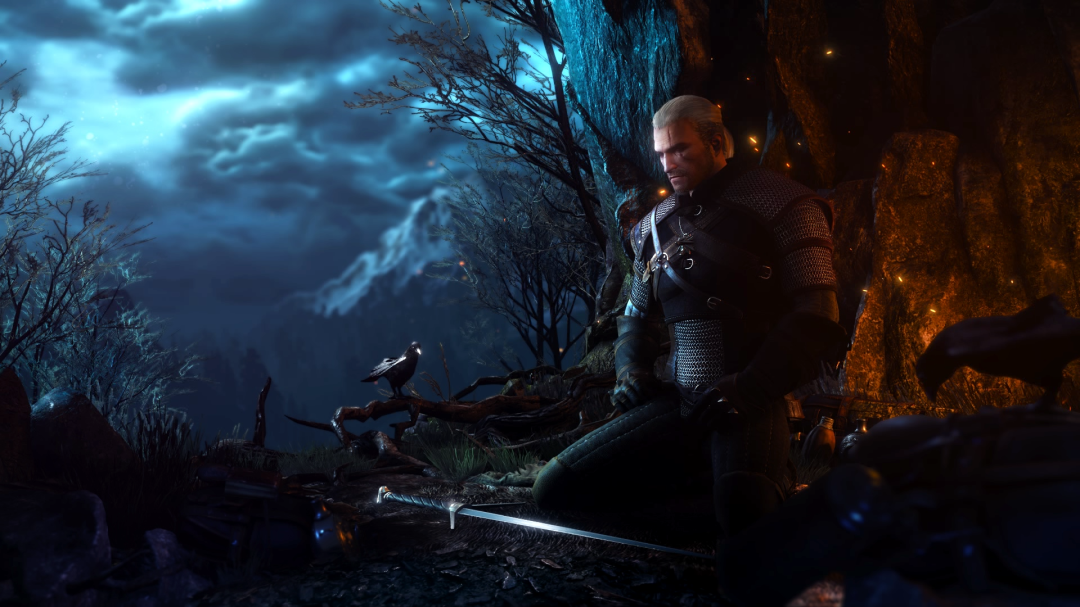
In order to restore the health and vitality of your character Gearlt the witcher, you need to meditate often. And all of us, in this crazy world we live in, could use a little meditation too.
All in all, The Witcher 3 was an incredible experience that I would recommend to anyone looking for an incredible story and game play experience that has the ability to help you reflect on some of the more important themes in life. Thank you CD Project Red for developing such a masterpiece.
The post The Top 10 Things I Learned About Life And Parenting From Playing The Witcher 3 appeared first on Sean Bissell.
]]>The post At 17 Years Old I Was Hazed In The Underground Tunnels of The University of Washington, Here’s What I Learned appeared first on Sean Bissell.
]]> Did you know there are over 7 miles of interconnecting tunnels that run underneath the University of Washington?
They are dark, narrow, and hot. Over 110 degrees hot.
If you brush against the pipes, your skin will melt. I saw it happen.
High school students were brought there and hazed in the year 1999. I was there.
It all started when my friends Daniel, Aaron and I, enrolled in an off-campus class in our Junior year of high school. It was a network technologies class. 2 hours a day.
The class was held in the bottom of a high school for dropouts or expelled kids who needed a second chance.
The school was in the bad part of town.
Once, I walked out the front door and was pushed back inside by an officer in full SWAT gear.
Someone crashed a car into the house across the street. They ran upstairs and took someone hostage. We all watched as it unfolded, our faces glued to the windows.
The school was rough, but we learned a lot about routers, modems, switches, and basically how to set up and maintain computers on a network in a corporate environment.
We ended up wiring that entire broken down school, drilled holes in floors and walls, ran CAT5 cable, terminated wires, set up modems and routers, and configured computers. In 1999 it was a unique skill to have, and we were proud.
As the year came to an end, our teacher let us know that she had a summer job offer for the students. Daniel, Aaron and I decided to interview.
The interview was interesting. They didn’t give much detail about the job.But they did say we would be installing and terminating cable, setting up modems and routers, and maybe configuring computers.
Sounded right up our alley.
Oh, and then they mentioned the pay. $12.09 an hour. That was more than I had ever made. The highest I had been paid per hour before that was $5.35.
All 3 of us were excited.
Our first job was on the campus of the University of Washington. That sounded great. Established. Credible. Academic. We were pumped.We showed up at the job site and did some quick introductions. There were 4 other people on the team. If you added us, it was 7 total.
The two guys that stand out in my mind were Joshau and DJ Dougy Fresh.
Joshau was a beast of a human, about 6 foot 5 inches tall, and 250 pounds of solid muscle. He drove a huge white truck with neon orange racing stripes. And yes his name was Joshau, not Joshua. He said his mom accidentally switched the “u” and the “a” on his birth certificate and never changed it out of pride.
DJ Dougy Fresh, was a goofy, shaggy, curly-haired, skinny-guy in his late twenties. He always looked down at his feet, bounced around, and never stood still. Whenever he stepped outside a smoke was instantly lit and between his lips.
The two other guys I hardly remember, they seemed like generic expendable goons in a movie, just extras in the cast to beef up the environment.
“So where do we start?” Aaron asked.
Chuckling. Joshau said, “You’ll see, follow us.”
Fully expecting to walk through the prestigious and beautiful hallways of the University of Washington, and end up in a classroom somewhere, we were disoriented and confused as we began to walk inside a parking garage, then downstairs. Then down more stairs, and more… Eventually we opened a door.
And we saw it.
A huge roll of thick black wire, taller than Joshau, on a wooden spindle, just staring at us.
Without talking, DJ Dougy Fresh bent down near the massive roll of wire and opened up a latch on the floor.
The latch opened up to a dark abyss. He dropped down inside. Disappearing.
Joshau said, “get in boys!”
Daniel looked at me, shrugged, and dropped down too.
I didn’t want to be last, so I tried not to think too much, mustered up some courage, and dropped down myself.A wave of heat blasted me in the face, and throughout my entire body, I immediately felt all the sweat glands in my body wake up and start churning.
I thought, “It must be 120 degrees in here!”
Once my brain recovered from the shock of the heat, my eyes started adjusting to the light.
A long straight tunnel expanded further than I could see in either direction. On the left there were thick metal pipes stacked on each other. To the right there were stacks of wires held up by metal trays.
There wasn’t enough room to put my arms out to the side without hitting my elbows against the wires and pipes.
Joshau yelled, “Whatever you do, DON’T TOUCH THE PIPES.”
He pointed at his face with both fingers, swished his mouth around a few times, then spit onto the pipes. With a sharp hiss, the spit instantly evaporated into steam and floated to the top of the tunnel.
We nodded in bewilderment. No touching the pipes.
As we walked, Joshau yelled, “There’s 7 miles of interconnecting tunnels just like this under the University, and they want us to wire them up with fiber optic cables.”
He kept walking, “That means we’re taking wires from the top, and running them through the tunnels to the end points. It’s going to take team work, and it won’t be easy, but we can do it.”
Joshau banged on a swinging metal door, “You see these gates? These gates show up about every quarter mile, if they close on you then you’re stuck inside. We tie them off with rope to keep them open. So don’t mess with the rope. Only I have the key. Don’t let these close on you.”
My head was reeling trying to take in all of this, what did we get ourselves into?
We started pulling the cable from the spindle and would hand it off to the next person at set intervals. Maybe 200 yards apart.
Once everyone was at their spot, pulling the cable became kind of like a one-way game of tug of war.Each time you grabbed the cable to pull, it would jitter, stutter, bounce around, and sometimes completely get locked up.
The 110 degree heat and the constant jittery-pulling induced drenching-sweat beyond anything I’d ever experienced.
It was the type of sweat that started out as thousands of perfectly formed beads. Eventually it became a salty sheen that would build up, sting your eyes, and puddle around you.That pool of sweat didn’t last too long as it soon evaporated from the intense heat.
Quickly we found out one of the perks of the job. Every hour there was a mandatory break due to health regulations.
We would use our cable as navigation and climb back up top. Often a very long walk. Sometimes a mile.
A blast of cold air would welcome us, accompanied by literally a truck load of Gatorade bottles. We would guzzle them down, pant, wipe our brows, chat for about 15 minutes, and then go back down below again.
I had never drank so much Gatorade in my life.
Weirdly no one ever needed to pee. It went straight out our sweat pores.
The third time we went above for a Gatorade break, we noticed that our friend Aaron wasn’t looking so great.I figured it was probably normal, as I’m sure I looked like hell too. I sure felt like it. Daniel didn’t look too great either.But something seemed a little off with Aaron, even for this situation. We just shrugged it off. We were doing our best to cope with the strange situation we had found ourselves in.
When we went back down again, we picked up our same stations and started pulling once again.
It felt hotter this time. Probably the contrast.
We kept pulling. Stutter, jitter, jumpy cable.
Then it totally stopped. Hard. Then went slack, smooth. Something was up.
I could hear a voice yelling at the top of their lungs from far down the tunnel, then another voice picked it up and repeated. Then another.
“STOP PULLING! GO UP TOP!”
Once I heard it, I found myself yelling it down the line too, “STOP PULLING! GO UP TOP!”
Up top we all huddled together, not drinking Gatorade this time, wondering what was up. In a few minutes DJ Dougy Fresh climbed up from the tunnels.
He walked over to us and said, “Heat exhaustion. Your buddy Aaron yacked all over the place. Almost fainted too.”
Daniel and I looked at each other in shock.
DJ Dougy Fresh continued, “I think he’s OK, but they’re going to keep an eye on him. I don’t think we can let him back down in the tunnels.”
And it turns out we wouldn’t see Aaron in the tunnels again…It was a bit discouraging to not have Aaron as part of our team any longer, but after a couple weeks Daniel and I slowly got used to the rhythm, the heat, and the narrow tunnels.
I even started recognizing parts of the tunnels, whereas before the whole place seemed like a repeating never-ending maze. It was fun to explore the hidden depths of the university hardly anyone knew existed.
But what wasn’t fun, and what I did not expect, was the hazing.
At first everyone was pretty nice to Daniel Aaron and myself, but shortly after Aaron was out of the tunnels, the game began to change.It started slow.
First, they would ask us to go up top to find something like a left handed wrench for one of the guys.
Of course, a left handed wrench doesn’t exist. They knew that. We knew that.
But when we couldn’t find the imaginary tool, it was a perfect excuse to be punished with the gruntiest of grunt work.
Next they had us lug a heavy bags full of tools around with us “just in case.” The bags were difficult to maneuver in the narrow tunnels and the heat made them even heavier. Of course, we never ended up needing what was in those bags.
They just wanted to watch us sweat and squirm.
Next was the longest running “gag.” If we did anything that was even slightly “wrong”, talked back, or showed any sign of disrespect, disobedience, or for any other reason… They would all start chanting “Nooooo Gatowaaaddee!” In a mocking baby-talk tone.
Sometimes “Nooooooo Gatowaaaaaaddeee!” would be chanted in a group. Other times you’d hear it echo from a quarter mile down the tunnel and then be repeated on down the line.
And, as the chant implied, you would no longer get your Gatorade on that break.
I learned very quickly to know my role and not attract any unneeded attention. This helped me avoid bad situations, but Daniel on the other hand is a loud-mouth and doesn’t take crap from people. I respect that about him. But this cost him many Gatorades and I found myself sneaking him some when I could.
Daniel’s hard hardheadedness and strong spirit drove the guys on the site to pull out the big guns to try and break him.
While we were walking through one of the hottest segments of the tunnels Daniel was in the back of the line. DJ Dougy Fresh told Daniel to go back and grab something they dropped about 100 yards back.
As Daniel walked back through the tunnel, I saw Joshau shut the nearby gate and snicker. When Daniel came back, he got close enough to see the gate was closed and he said “Hey guys, can you open the gate for me?”
“Sure” said Joshau, and looked for his keys to unlock the gate.
“Wait, I can’t find my keys. Hold on.” He bumbled.
“Man, looks like I must have dropped ’em. You might want to go back in there and try and find them, I’m not sure where they are. Really sorry man. I’ll wait here.”
Daniel looked a bit shocked, trying to figure out if this was serious or another “joke”.
We all knew that this could be bad. There was only one set of keys, and to get another set would be tricky. Especially because hardly anyone on the UW campus even knew about these tunnels, let alone where to get a spare key.
Daniel went back to try and find the key. I told him I’d wait for him and look for the key on my side.
The other guys went up top to “see if the key was up there”.
It was already late in the day, and we were about to head home. Not only was Daniel trapped, but potentially the whole team was held up from going home.
5, 10, 15, 20, then 30 minutes went by. Tired and sweaty both Daniel and I frantically searched for the missing key, knowing that we would likely not find it.
A guy from the team came down. I thought, “Great! Good news! He probably found the key, or has a spare.”
Instead, he let us know that the office that has the spare key is closed for the day, and we won’t be able to get another key until tomorrow morning.
Looks like Daniel would have to spend the night in the scorching hot tunnels with no relief.
Panic set in. What were we going to do? What would we tell our parents? Would Daniel survive? Should I stay with him?
It felt like hours passed. Daniel was scared. I was scared. I told Daniel I’d be right back. I was going up top to see what was happening.These guys were just hanging out, waiting, chatting, they didn’t seem worried at all, they seemed pretty happy.
I asked what the plan was. They shrugged their shoulders, then looked around at each other.
DJ Dougy Fresh said “Time?”
Joshau said, “Time.”
Joshau walked towards the entrance to the tunnels. I followed him back to where Daniel was locked.
I watched as he did a not-so-sly move of dropping the keys on the ground. He then pretended to look around and said, “Here they are! How could you guys not see these?”
He unlocked the door and let Daniel out.
Daniel didn’t say much, nor did I, and nor did the rest of the team. We didn’t talk about that incident, that day or after.
But something changed.
Daniel’s spirit didn’t break, and I think DJ Dougy Fresh and Joshau knew they went too far.
Somehow that torturous act had a normalizing effect and we became on the same level together. It was a strange mix of resentment and mutual respect after that point.
Work was strange for about a week, people were quiet, but slowly after we became a tight team. Everyone got Gatorade.
We even created some unorthodox methods for pulling the cable quicker. And we finished the job ahead of schedule.
After each successful cable pull Joshau would yell and jump at the top of his lungs, “We kicked that cable’s ass!”
I learned a lot from that experience. Sometimes I think that I shouldn’t have put up with their crap, that I should have stood up for myself, that I should have quit.
But another part of me is glad I did put up with it, that I did navigate that insane physical and social landscape, that I was able to maintain my friendship with Daniel, and become accepted as part of the team even in that environment.
- I learned that even if something is super scary and intimidating, you can usually do it if you just put your head down and power through.
- I learned that age difference is often irrelevant. We were 17 year old kids working with people in their early 30’s and by the end it hardly mattered.
- I learned that if you do work that no one else wants to do, you can get paid a lot more than anyone else.
- I learned to know my role and respect those with more experience, expertise and knowledge than myself.
- I learned that there really are entire hidden worlds right under your feet. Secrets are real.
- I learned that hazing can help a team bond, but there is a line that should not be crossed. Finding that line is difficult and dangerous.
I can’t say I was sad to leave those tunnels, but they’ll always have a place in my heart.
And so will Joshau and DJ Dougy Fresh.
The post At 17 Years Old I Was Hazed In The Underground Tunnels of The University of Washington, Here’s What I Learned appeared first on Sean Bissell.
]]>